

Meet the Cousins! Buckram & Ban-Rol
Every family has a couple of practical souls who quietly keep everything together. They might not wear the showiest fabric, but you soon notice when they’re missing! 😄
Let’s meet two useful cousins from the sewing cupboard: buckram and Ban-Rol. One adds body to a project; the other supports waistbands and has a clever trick for tiny hems.
I’m calling them cousins because they both lend support. Each has its own job, so let’s give them a proper introduction.
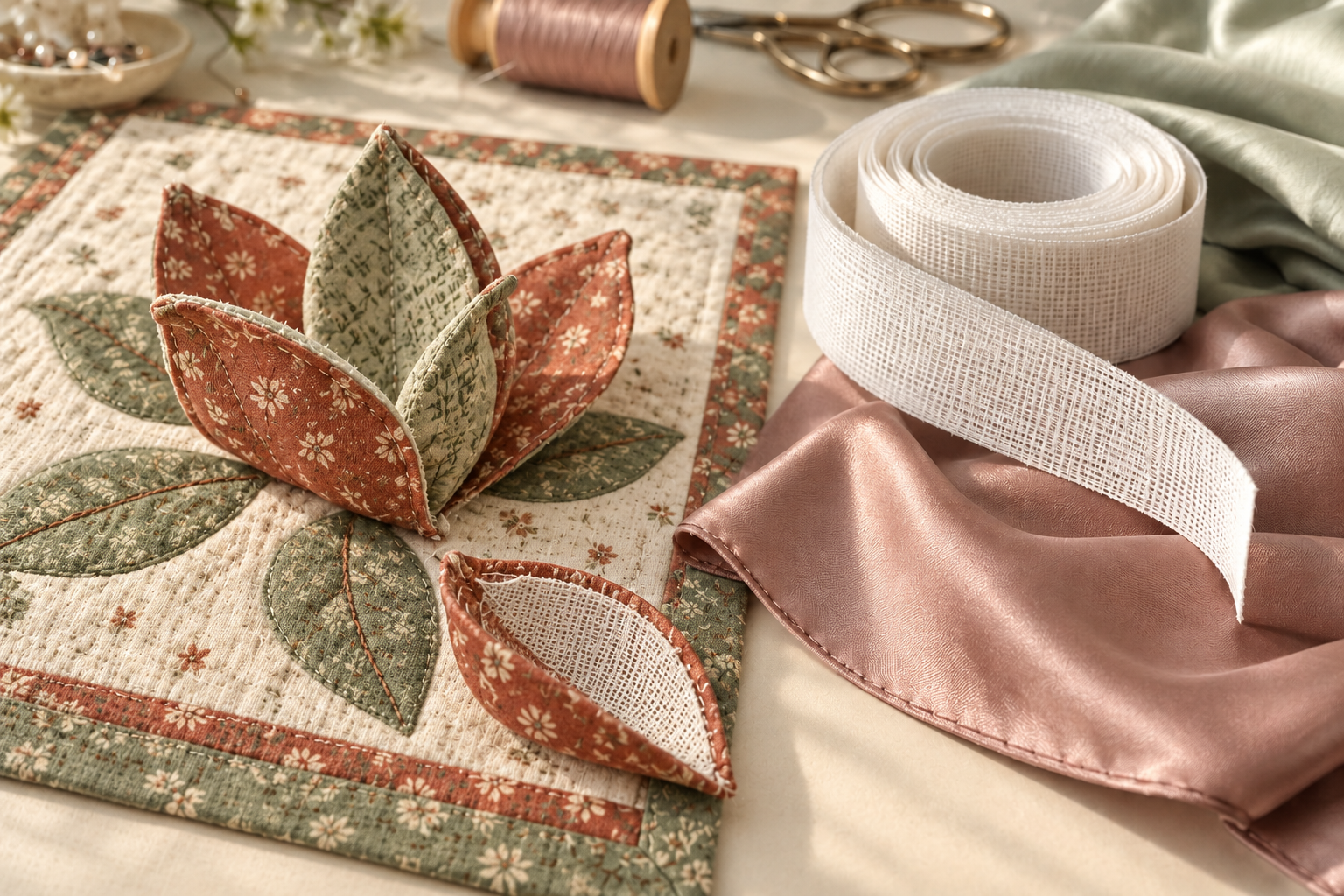
Gather a few things for a trial
You don’t need a whole project to get acquainted. A couple of samples are a lovely place to start.
- For buckram: Pellon 376, two matching fabric scraps, an iron, ironing surface and damp pressing cloth.
- For a Ban-Rol hem: Ban-Rol, a straight scrap of your chosen fabric, scissors, thread and a sewing machine with a suitable needle.
- Your pattern and the relevant product or tutorial instructions.
Meet Buckram: the one with a little backbone
Have you chosen beautiful fabric, only to discover it needs help holding its shape? What happens underneath can make quite a difference.
Our Pellon 376 fusible buckram is a crisp woven cotton stiffener with adhesive on one side. It adds body while retaining flexibility—useful for hats, fabric belts, handbags and drapery.
Try the two-scrap test: leave one piece of fabric as it is and fuse buckram to the other. Bend them, stand them up and feel the difference. That comparison helps you decide how much structure your project needs.
Fusing Pellon 376
Place the adhesive side against the wrong side of your fabric. Pellon specifies a wool/steam setting with steam, a damp pressing cloth and firm pressure for approximately eight to ten seconds in each position. Lift the iron and overlap slightly until the area is fused.
Test first to check heat tolerance and bonding, then let your sample cool before assessing it. Keep Pellon’s product page and directions beside you; these settings apply specifically to Pellon 376.
Five ideas for a little extra shape
- A ribbon rose. Dans le Lakehouse’s tutorial uses a buckram base beneath wired ribbon petals. Try a small rose to check how comfortably you can stitch through your layers.
- A fabric belt. Give a favourite print another outing with this five-step belt tutorial, which uses buckram or stiff interfacing.
- A shaped hat brim. Melly Sews’ hat tutorial and crown template includes buckram as an option in the written guide.
- A storage basket. This basket tutorial uses synthetic buckram. Test our cotton Pellon 376 for the firmness and ease of sewing you want.
- Costume details. Explore Leafnin Cosplay’s standing shoulder pieces for fabric shapes with character.
For projects using our fusible buckram, follow Pellon’s fusing directions and test your layers rather than assuming another interfacing will behave identically.
And now for the artsy-fartsy possibilities!
Who says a wall hanging—or a fabric basket’s decoration—has to sit flat?
Picture a cotton flower with its petal tips lifting from the background, or a stitched leaf with its tip standing free. Buckram can provide support inside the shape.
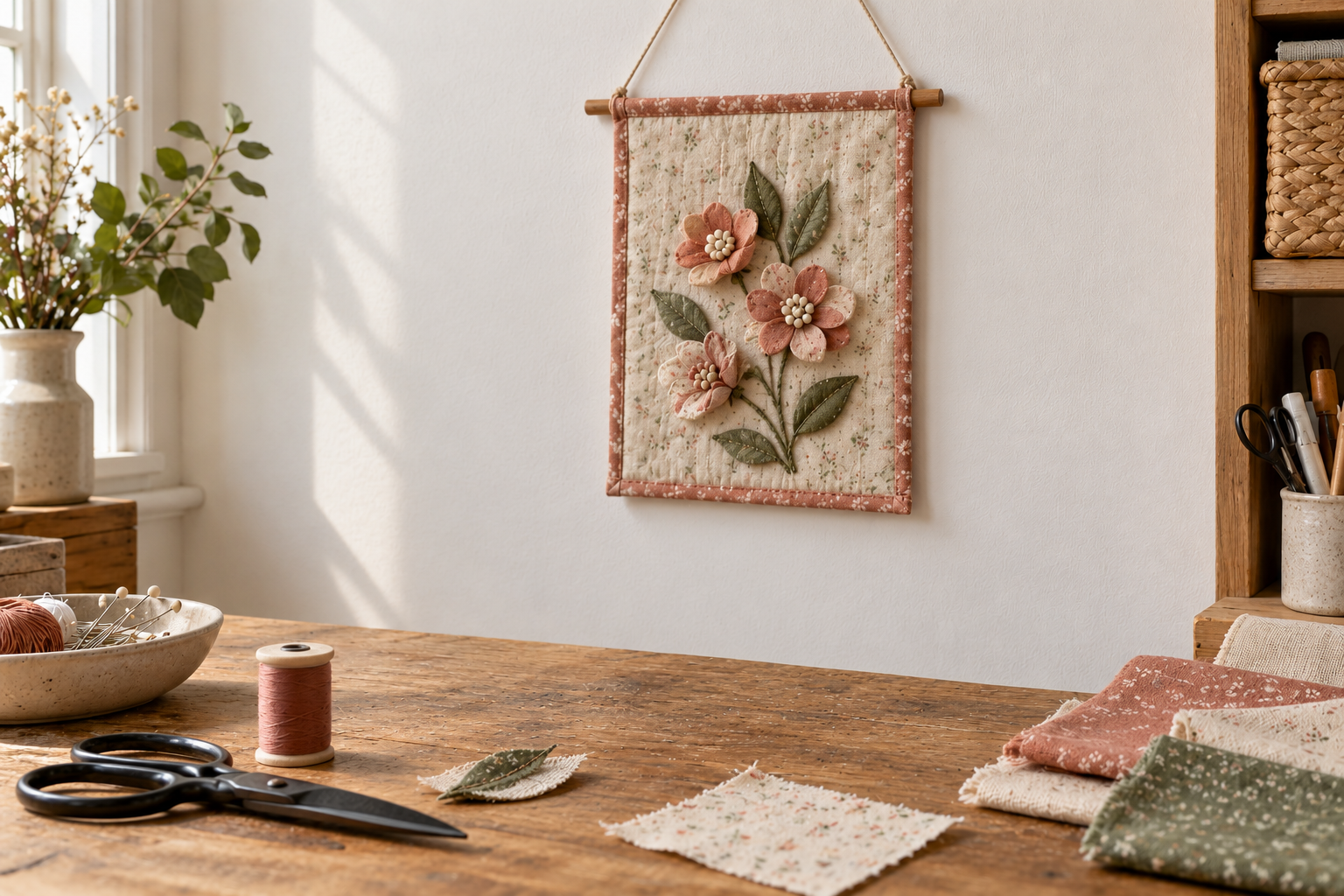
Try a suitable woven fabric, such as quilting cotton. Shape a small supported piece, then test how to stitch its base to the project while leaving the raised part free. Fabric, shape and attachment all affect the result.
A little texture, a little shadow, a little “ooh, what have you done there?”—there’s room to play!
Pellon 376 is 20 inches wide and sold by the yard. Meet Buckram in the shop.
Meet Ban-Rol: the waistband cousin with a secret talent
Ban-Rol helps waistbands resist rolling, twisting and collapsing. Skirts, trousers, shorts, costumes and aprons can all benefit from that support.
But the trick I particularly want to share is its use as a removable narrow-hem guide. Fine blouse, slip or dress fabrics can shift just when you need a tiny fold to stay put. Slippery polyester can be every bit as challenging as silk!
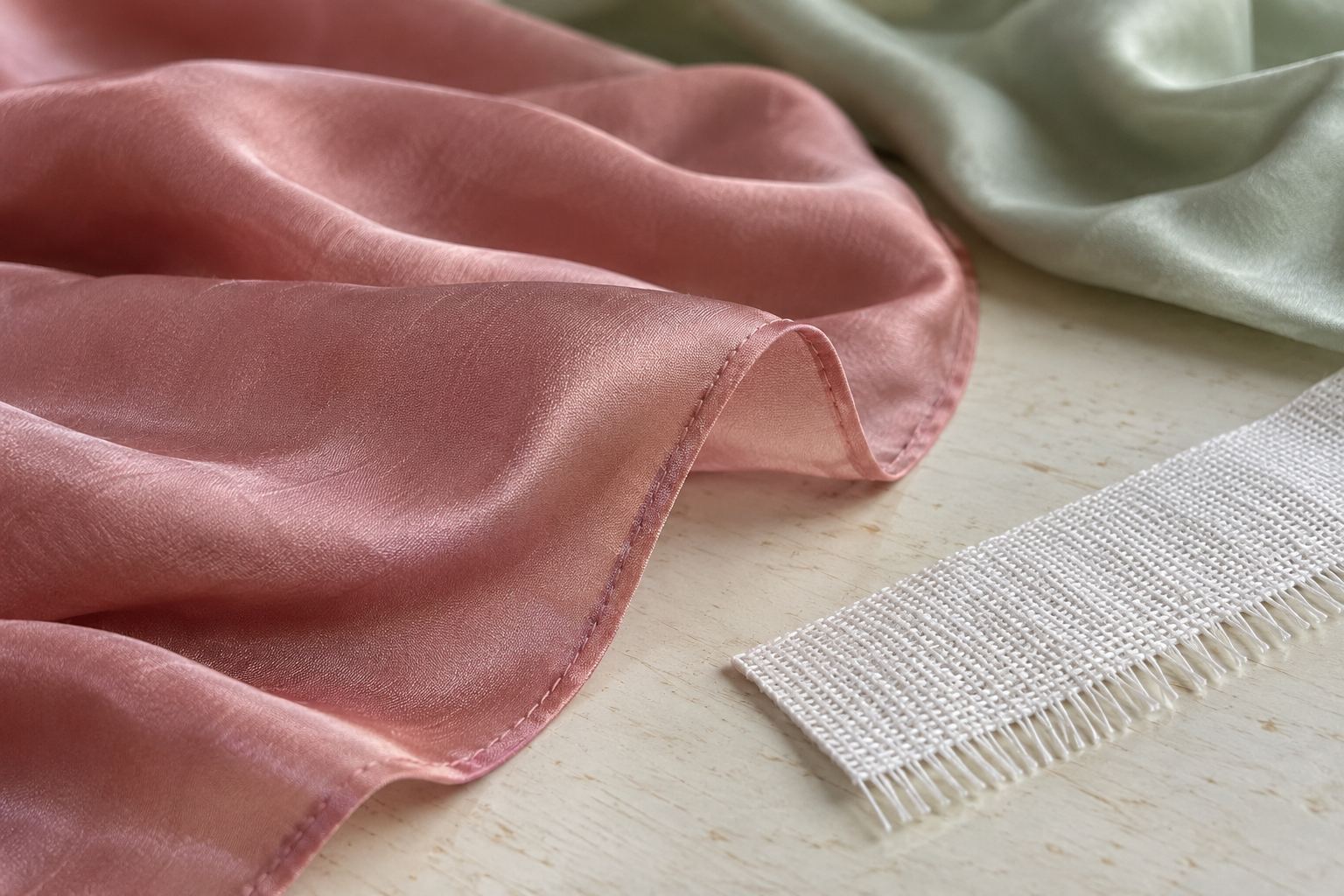
Prepare, fold, stitch and remove
The following is a short overview of Oliver + S’s illustrated tutorial. Follow its photographs to see the folds clearly.
- Prepare a comb-like edge. Remove lengthwise threads from one edge of the Ban-Rol until the exposed teeth match your intended hem width. Keep the remaining strip woven.
- Make the first seam. Align the prepared edge with the fabric’s right side. Stitch through the teeth beside the woven section, without catching the intact weave; it needs to slide out later.
- Form the folds. Turn the teeth and seam allowance to the wrong side. Fold again, wrapping the fabric around the teeth to enclose the raw edge. Press only as your fabric allows.
- Finish and release. Edgestitch the inner fold, then gently lift the finished hem off the teeth.
Begin with a straight scrap edge before tackling your lovely fabric. Save your prepared strip for another hem—it can be reused.
Our Ban-Rol is sold by the yard in four widths: 1 inch (25 mm), 1¼ inches (32 mm), 1½ inches (38 mm) and 2 inches (51 mm). Choose the width for your pattern or project.
Which cousin does your project need?
For a hat brim, belt or craft project needing body, try fusible buckram. For waistband support or the removable hem guide described here, choose Ban-Rol. Our Pellon 376 has adhesive and is intended for a different job.
Neither cousin needs to steal the limelight from your beautiful fabric. Helping it look its best earns them both a place at the sewing table!
Tell me what you’re making
Would you try raised fabric petals, or is there a slippery hem waiting for your attention? Leave me a comment below—I’d love to hear your ideas, feedback and questions. You’re welcome to suggest a sewing helper or technique for a future Wednesday Stitch, too.
Happy stitching,
Carrie & Lucy
Everything Fabric